Custom Marine Fuel Bladders for Yachts, Fishing Boats, and Long-Range Vessels
Marine fuel storage becomes more complicated when the boat has limited space, changing movement, and specific fuel-transfer requirements.
Custom marine fuel bladders help yacht owners, fishing boat operators, and long-range vessel buyers carry auxiliary fuel in a way that better matches onboard space, fuel type, valve direction, hose connection, and temporary storage needs.
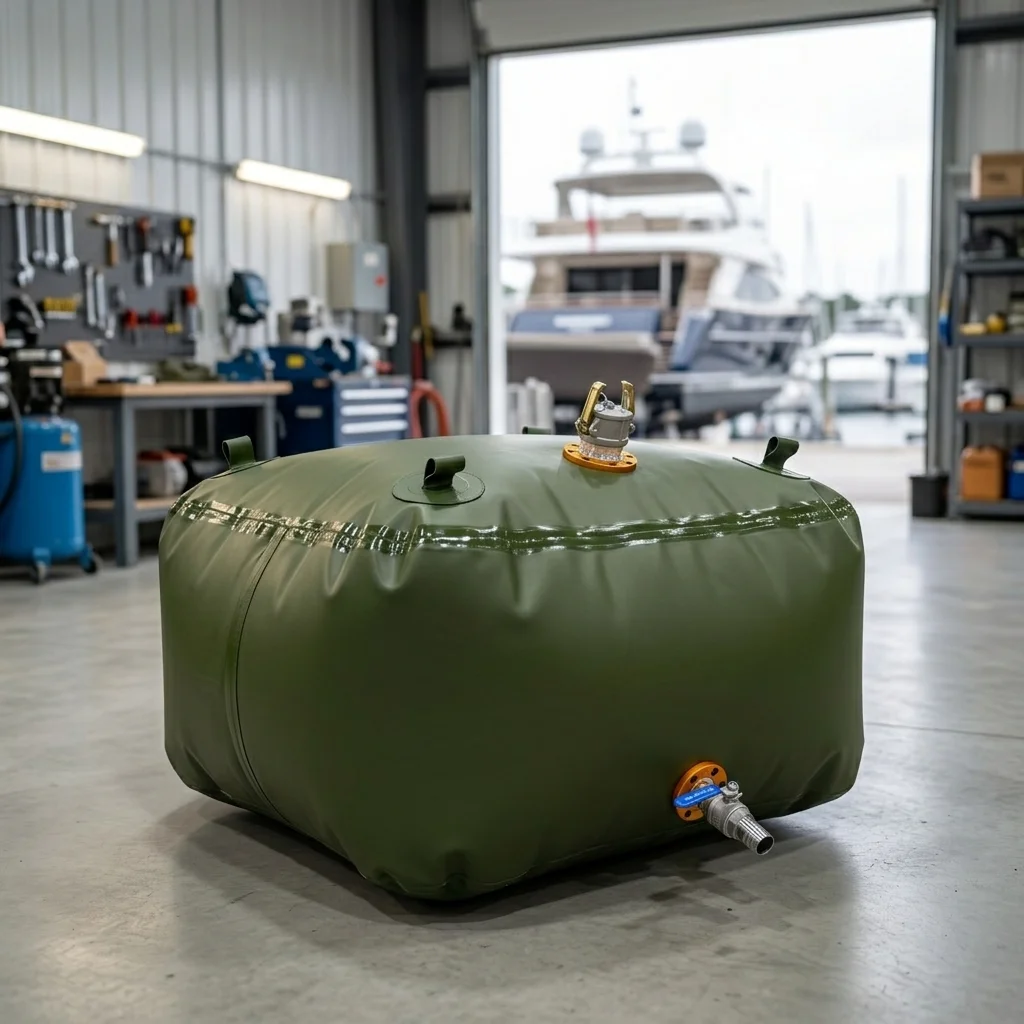
For marine buyers, a fuel bladder is rarely just a storage bag. It is usually part of a real operating plan: extending cruising range, supporting offshore fishing, supplying auxiliary fuel, or solving a space limitation that a standard hard tank cannot handle. At SpaceBladder, we treat marine fuel bladder inquiries as custom specification work, because every boat has different deck space, access direction, hose connection, and fuel-transfer method.
A good inquiry should not only ask for price. Buyers should confirm fuel type, capacity, available space, inlet and outlet valve details, connector type, quantity, destination country, packing needs, and the real boat application. These details help reduce misunderstanding before production and make the final fuel bladder more practical for marine use.
What makes marine fuel bladder requirements different from land-based use?
Fuel storage on land is usually more stable, while marine use involves movement, space limits, and connection challenges.
Marine fuel bladders need to consider vessel movement, limited deck or cabin space, secure placement, hose routing, valve access, temporary storage, and fuel-transfer safety more carefully than land-based storage.
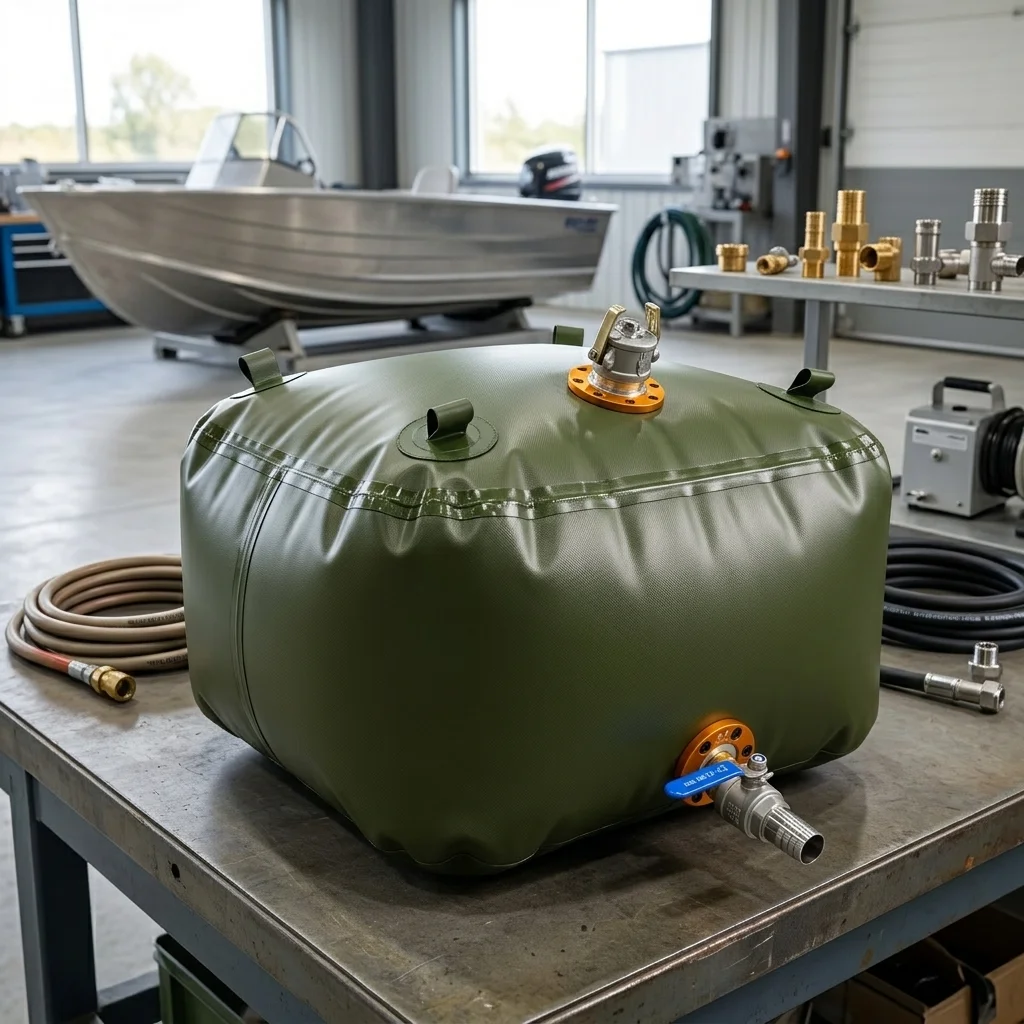
Marine use is not the same as static storage
A land-based fuel bladder may be placed on a relatively stable surface for temporary storage, generator backup, construction fuel supply, or farm equipment refueling. Marine use is different because the bladder may be placed on a deck, inside a cabin space, near marine equipment, or in another limited onboard area. The vessel may move, vibrate, tilt, or operate in changing weather conditions.
This does not mean a fuel bladder cannot be used for marine applications. It means the buyer needs to define the application more clearly before ordering. A standard-size bladder may not match the boat’s available footprint, and a poorly positioned valve may make hose connection difficult.
For this reason, many marine buyers choose custom fuel bladders instead of only selecting a standard size.
Key differences buyers should consider
| Requirement area | Land-based use | Marine use |
|---|---|---|
| Placement surface | Often more stable and open | Limited deck, cabin, or boat-specific space |
| Movement | Usually low movement | Vessel motion and vibration must be considered |
| Valve access | Easier to arrange | Must match onboard hose direction |
| Storage after use | May remain in place | Often needs folding and temporary storage |
| Connection method | Can be flexible | May need to match existing marine fuel equipment |
| Handling | Usually easier with ground access | Boat access and carrying method matter more |
Marine buyers should avoid treating a fuel bladder like a universal container. The better approach is to start from the vessel: where will it be placed, how will it be filled, how will fuel be transferred, and how will the bladder be stored after use?
How should yacht buyers confirm capacity and deck space?
A yacht buyer may know the desired extra range, but the deck space may limit the practical bladder size.
Yacht buyers should confirm auxiliary fuel capacity by checking route distance, expected fuel consumption, reserve margin, available deck or cabin dimensions, height restrictions, and safe access to the inlet and outlet valves.
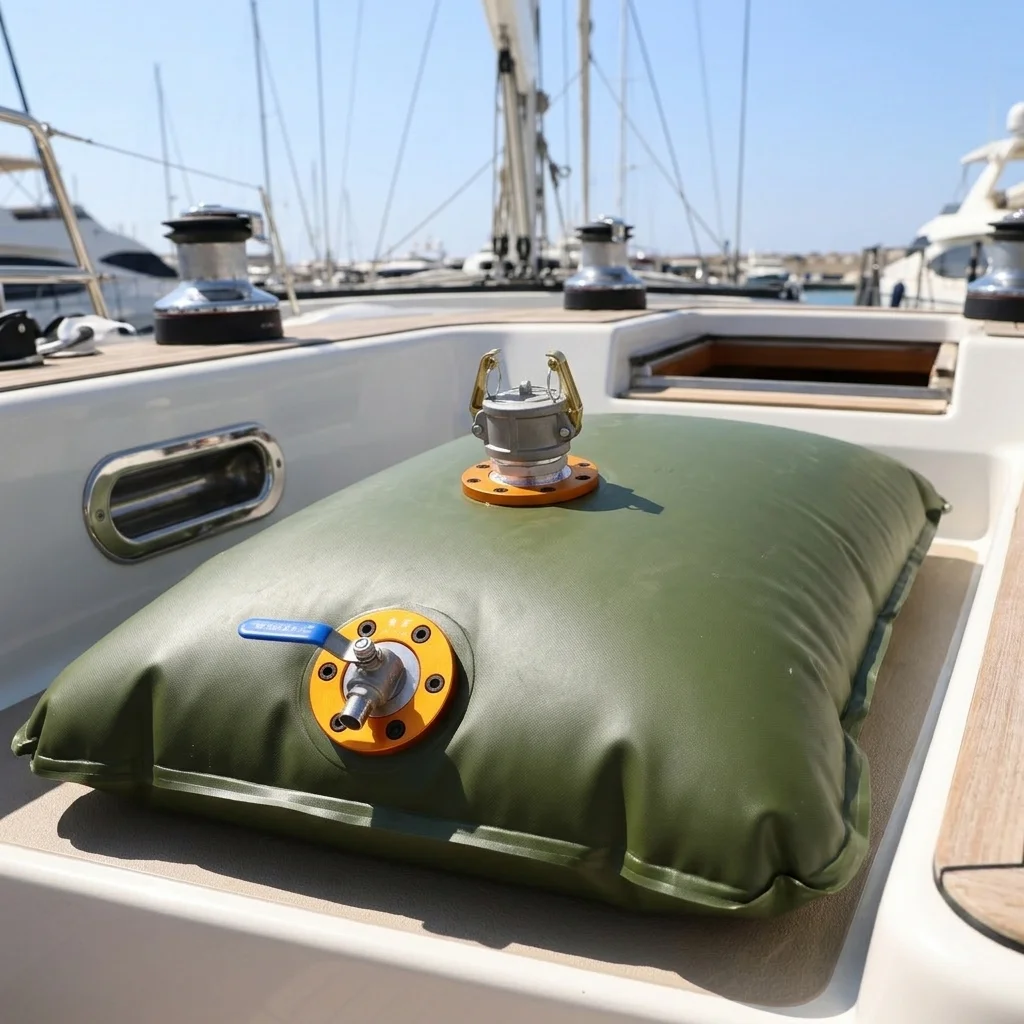
Capacity should follow the voyage plan
Yacht buyers often request fuel bladders because they want more flexibility for longer trips. However, choosing the largest possible capacity is not always the best decision. A larger bladder occupies more space, becomes heavier when filled, and may be harder to secure, connect, drain, and fold.
A more practical method is to calculate the target auxiliary fuel based on the voyage plan. Buyers should consider cruising distance, engine fuel consumption, fuel reserve, and whether the bladder is for regular long-range use or only occasional backup.
For example, a buyer may think they need 1000L extra fuel, but the available deck area may only support a more practical size. In that case, two smaller bladders or a custom dimension may work better than one oversized bladder.
Deck space details are essential
| Detail to confirm | Why it matters |
|---|---|
| Available length | Helps define the bladder footprint |
| Available width | Prevents blocking walkways or equipment |
| Height limitation | Important for covered or cabin areas |
| Deck surface | Helps evaluate placement practicality |
| Valve access direction | Makes filling and draining easier |
| Securing method | Helps reduce unwanted movement |
| Folding storage area | Important after the bladder is emptied |
At SpaceBladder, a clear marine inquiry often includes both capacity and space dimensions. For example: “We need an 800L diesel fuel bladder for a yacht. Available deck area is 2000 x 1000 mm. Outlet should face the stern side. We need a 2 inch camlock inlet and 1 inch outlet valve.”
This type of information is much more useful than only asking for “800L fuel bladder price.”
Why are reinforced materials and reliable welding important at sea?
Marine use can expose the bladder to movement, handling pressure, and more demanding operating conditions.
Reinforced material and reliable welding are important because marine fuel bladders may face movement, folding, pressure changes, handling stress, and repeated connection during fuel transfer.
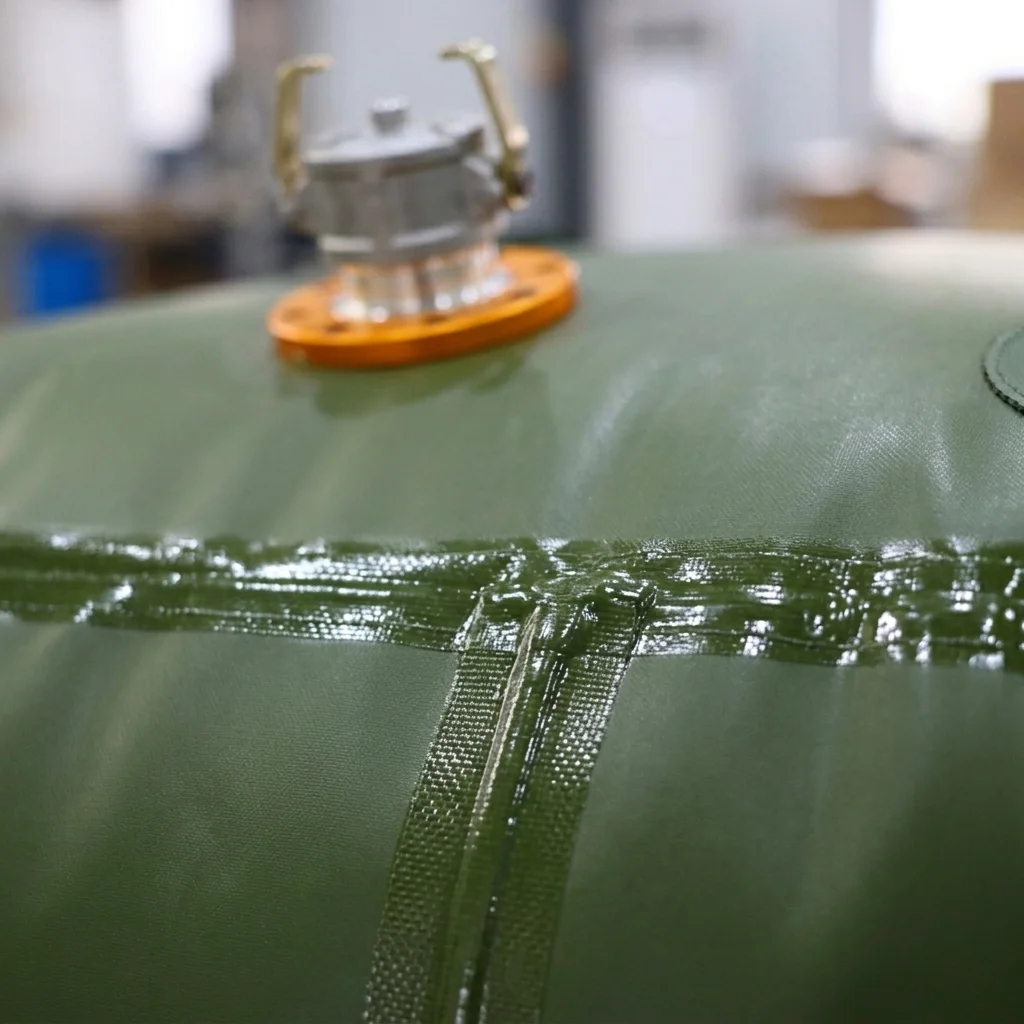
Material selection should match the fuel and application
For marine fuel bladder projects, material discussion should start with fuel type and application. Diesel, gasoline, and other fuels may require different compatibility considerations. Buyers should not assume one material is suitable for every fuel or every use condition.
The bladder material should also support practical handling. Marine buyers may need to move the bladder before filling, fold it after draining, or place it in a limited space. Reinforced material helps improve durability for these real operating conditions, but the final design still depends on capacity, shape, fittings, and usage environment.
Because fuel storage and transfer involve safety responsibilities, buyers should also confirm local marine regulations and professional installation requirements when connecting any auxiliary fuel system.
Welding affects reliability and buyer confidence
Welding quality is especially important for flexible fuel storage products. The seams need to be designed to reduce leakage risk under practical use conditions. Buyers should pay attention to welding method, seam position, reinforcement design, and quality checks before shipment.
| Quality area | Buyer should ask about |
|---|---|
| Material compatibility | Whether the material is suitable for the intended fuel |
| Seam reinforcement | Whether key seam areas are reinforced |
| Welding consistency | Whether the welding is clean and stable |
| Valve reinforcement | Whether fittings are supported by reinforced areas |
| Inspection process | Whether practical checks are done before packing |
| Packing protection | Whether valves and fittings are protected during shipment |
The lowest price is not always the safest choice for marine use. A better supplier should help the buyer confirm the real application, not simply quote the cheapest material. SpaceBladder can discuss reinforced material, valve reinforcement, and welding details based on the buyer’s marine application and required specifications.
Which accessories are commonly requested for marine fuel bladders?
Marine buyers often need more than the bladder body; fittings and accessories affect real usability.
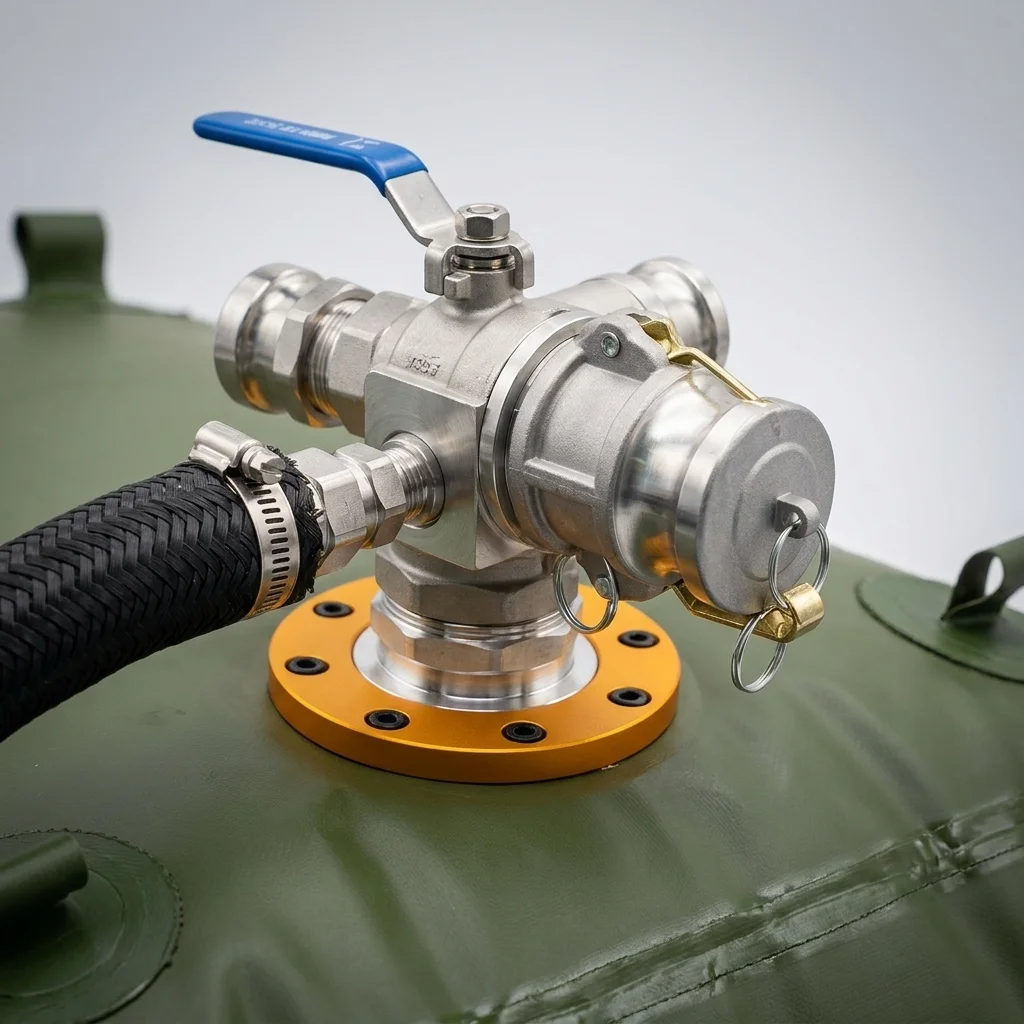
Common marine fuel bladder accessories include camlock inlet fittings, stainless outlet ball valves, quick connectors, hose adapters, handles, reinforced patches, protective packing, and customized valve positions.
Accessories should match the fuel-transfer method
Different marine buyers use different transfer methods. Some use pumps, some use gravity transfer, and some need the bladder to connect with existing hose systems. That is why accessory selection should not be random.
The inlet may need a larger camlock fitting for faster filling. The outlet may need a stainless ball valve with quick connector. Some buyers may request a specific hose adapter, valve direction, or outlet position to match the boat layout.
If the buyer already has an existing hose, pump, or connector, photos are very helpful. A clear photo of the connector end can reduce errors in thread type, size, or connection style.
Commonly requested accessory details
| Accessory | Why buyers request it |
|---|---|
| Camlock inlet | Faster filling and easier connection |
| Stainless outlet ball valve | Controlled fuel discharge |
| Quick connector | Easier connection with existing hose |
| Hose adapter | Helps match fuel-transfer equipment |
| Reinforced valve patch | Supports fitting area |
| Handles or lifting points | Helps handling before or after filling |
| Protective packing | Reduces transport damage risk |
| Custom valve position | Matches onboard space and hose routing |
Marine buyers should confirm inlet size, outlet size, valve material, connector type, hose diameter, and valve position before production. These small-looking details can strongly affect whether the fuel bladder is convenient to use onboard.
For related liquid storage needs, buyers may also compare marine fuel bladders with other flexible storage products such as pillow bladder tanks, but fuel and water applications should be specified separately because material and fittings may differ.
What should buyers provide before requesting a marine fuel bladder quotation?
A clear quotation depends on clear application details, not just capacity.
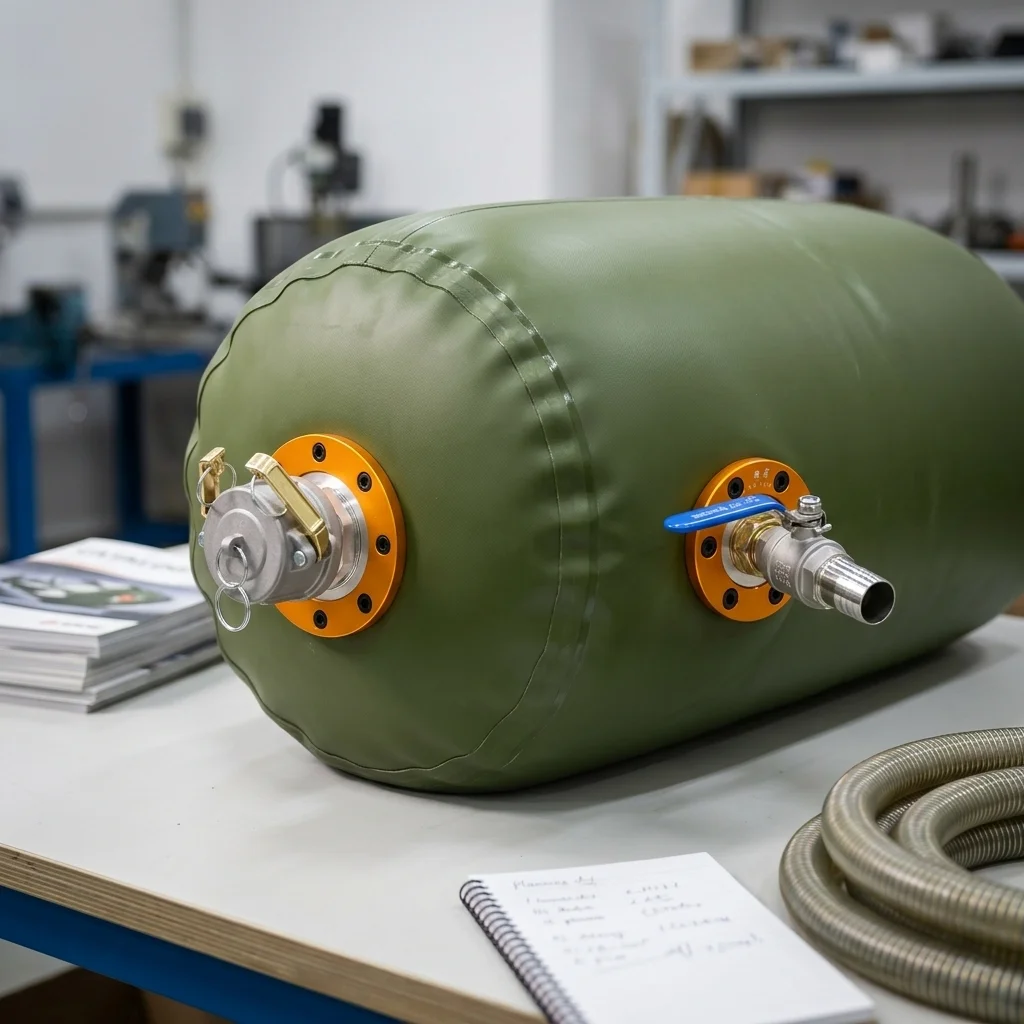
Before requesting a marine fuel bladder quotation, buyers should provide fuel type, capacity, available space, desired dimensions, valve and connector details, quantity, destination country, packing needs, and the specific marine application.
A complete inquiry saves time
A simple message like “Please quote fuel bladder” is too general for a custom marine product. The supplier may need several rounds of questions before giving a useful recommendation. A detailed inquiry allows the supplier to evaluate material, capacity, fittings, production difficulty, packing, and shipping more efficiently.
For yacht owners, fishing boat operators, distributors, and long-range vessel buyers, the quotation should reflect real usage, not only product volume. A 500L bladder for temporary deck use may require a different configuration from a 500L bladder designed for a specific compartment or hose direction.
Buyer quotation checklist
| Information needed | Example |
|---|---|
| Fuel type | Diesel, gasoline, or other fuel |
| Capacity | 500L, 1000L, 2000L, or custom |
| Available space | Length x width x height limitation |
| Application | Yacht, fishing boat, long-range vessel, backup fuel |
| Inlet requirement | 2 inch camlock, threaded inlet, or custom |
| Outlet requirement | 1/2 inch, 3/4 inch, 1 inch valve, or custom |
| Connector type | Quick connector, camlock, hose adapter |
| Valve position | Top, side, end, or specific direction |
| Quantity | Sample order or bulk order |
| Destination country | Helps estimate packing and shipping needs |
| Packing needs | Carton, woven bag, pallet, or export packing |
A strong inquiry could look like this:
“We need 3 pcs custom marine diesel fuel bladders for fishing boats, 1000L each. Available deck space is about 2200 x 1200 mm. Required inlet: 2 inch camlock. Outlet: 1 inch stainless ball valve with hose connector. Valve should face the stern side. Destination: New Zealand. Application: auxiliary fuel for long fishing trips.”
This type of inquiry gives SpaceBladder enough information to discuss a more practical solution.
Conclusion
Custom marine fuel bladders should match the vessel, fuel type, onboard space, valve direction, connector details, handling method, and real voyage application.