Foldable Fuel Bladders for Boats: A Practical Guide for Extending Marine Range
A boat may have enough power, crew, and equipment, but limited fuel capacity can still restrict the route.
Foldable fuel bladders help boat owners and marine operators carry auxiliary fuel for longer trips, emergency backup, or temporary range extension when fixed tanks are not enough. Buyers should confirm fuel type, target capacity, placement area, hose connection, valve size, and storage method before ordering.
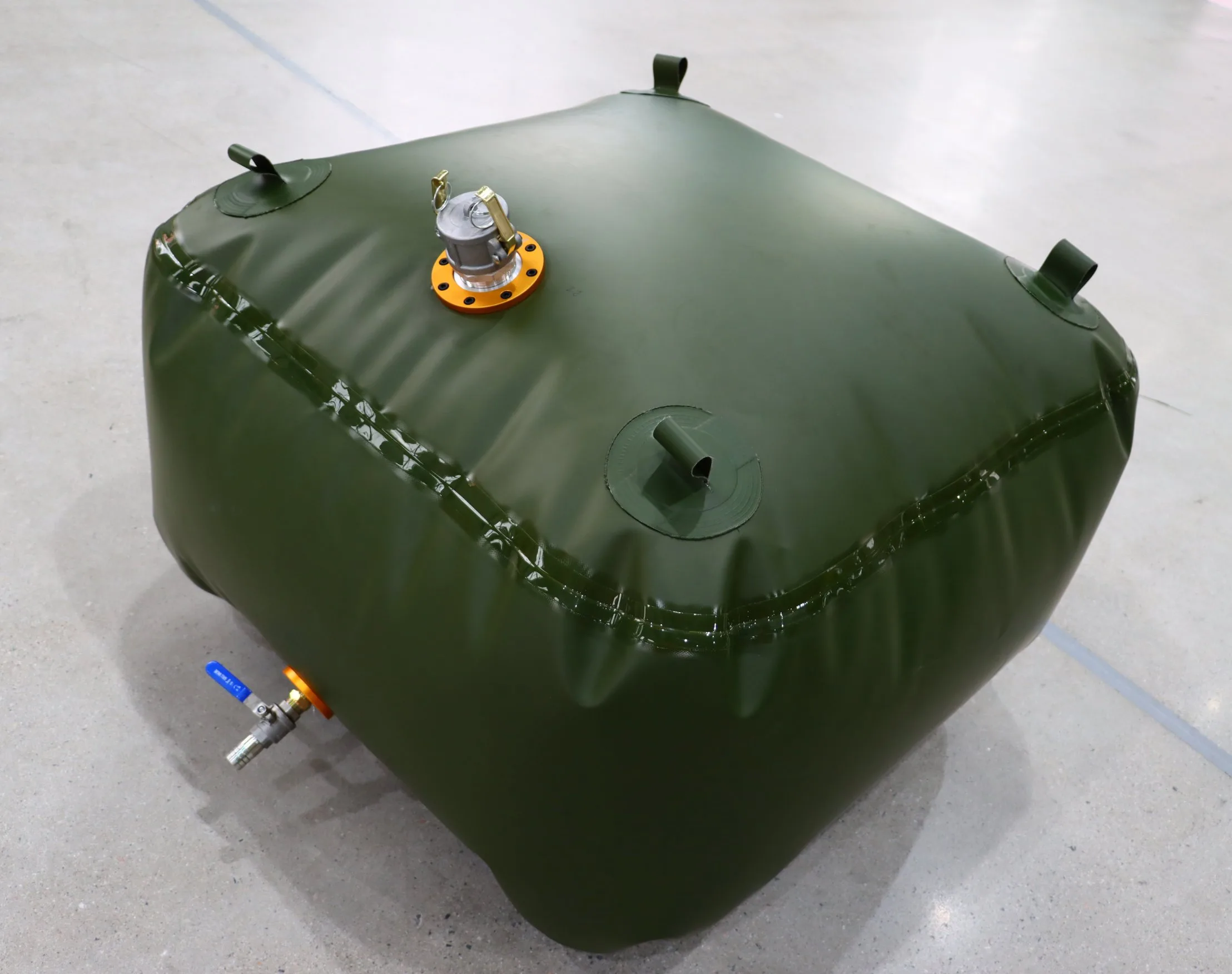
For many marine buyers, the question is not simply whether a fuel bladder is cheaper than a hard tank. The real question is whether the bladder can match the boat’s route, deck or cabin space, fuel system, and handling method. At Spacebladder, we usually treat marine fuel bladder projects as specification-matching work: the bladder must fit the boat, the fuel, the connection method, and the actual voyage plan.
A foldable bladder can be useful for long-distance boating, yacht cruising, fishing operations, rescue support, or temporary fuel backup. But if the buyer only asks for “one fuel bag price,” the supplier may not have enough information to recommend a suitable design. Capacity, filled shape, valve position, folding method, and outlet connection all matter.
Why do boat owners and marine operators use auxiliary fuel bladders?
Running short of fuel offshore is not just inconvenient; it can affect route planning, safety margin, and operating flexibility.
Boat owners use auxiliary fuel bladders to extend marine range, support longer routes, provide temporary fuel backup, or replace limited hard-tank capacity without permanently modifying the vessel.
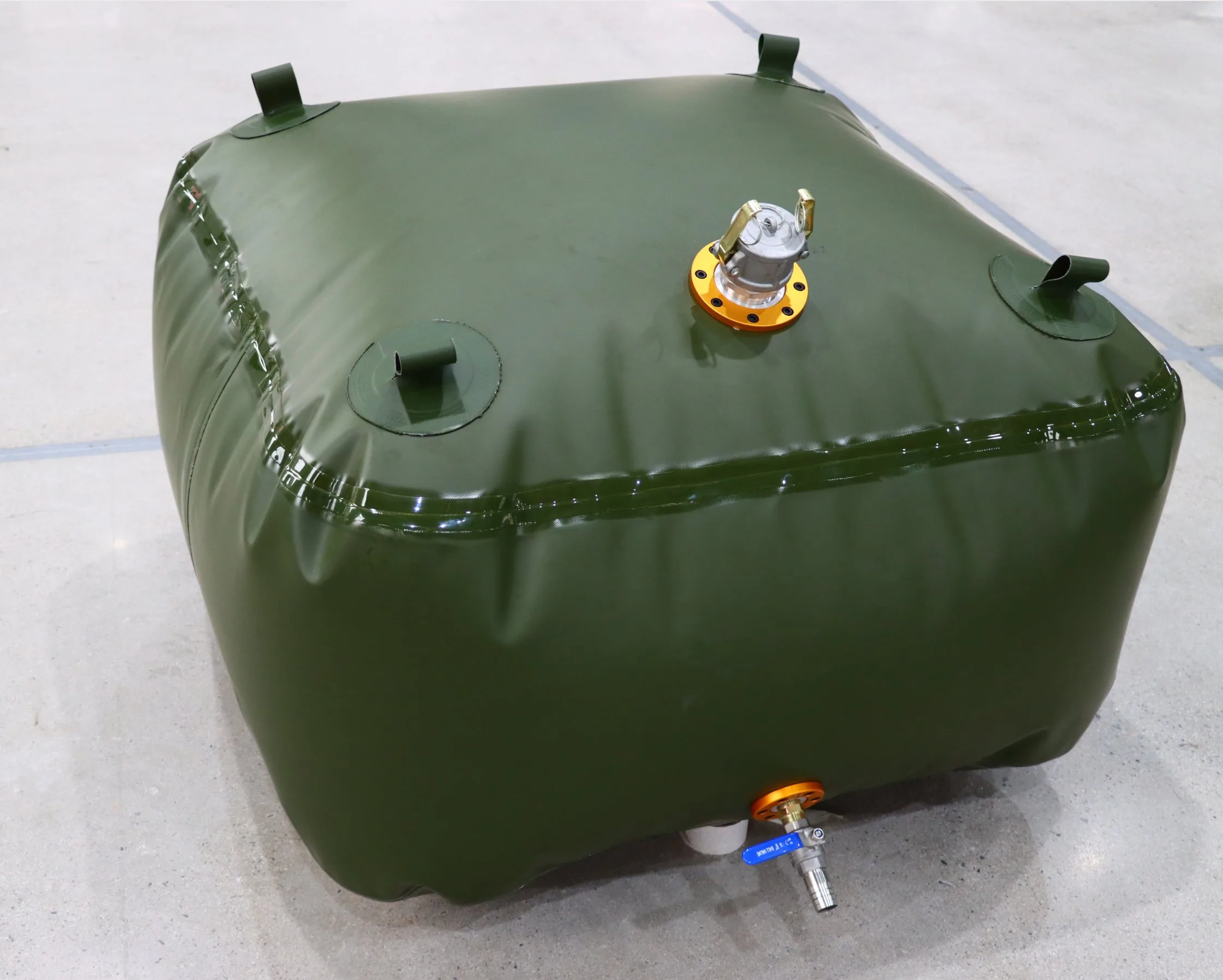
Extending range without permanent tank changes
A fixed fuel tank is limited by the original boat design. For many small boats, yachts, patrol boats, fishing vessels, and workboats, increasing hard-tank capacity may require structural modification, installation labor, and space that is not always available. A foldable fuel bladder offers a more flexible auxiliary option because it can be used when needed and folded after use.
For example, a boat owner planning a long trip may only need extra fuel capacity for several voyages per year. In that case, a permanent hard tank may not be practical. A foldable bladder can provide temporary additional range while keeping the boat layout more flexible.
This is also why many buyers looking at fuel bladders are not only asking for storage volume. They are solving a route problem, a space problem, or a temporary fuel supply problem.
Common marine use cases
| Marine situation | Why a foldable fuel bladder may be considered |
|---|---|
| Long-distance cruising | Extra fuel helps improve route flexibility |
| Fishing boat operations | Temporary fuel support for longer working hours |
| Yacht auxiliary fuel | Additional fuel without permanent tank modification |
| Emergency backup | Reserve fuel for uncertain route or weather conditions |
| Replacement support | Temporary solution when the original tank is limited or damaged |
| Marine project supply | Fuel transfer support for remote water-based operations |
For these applications, the buyer should not only ask, “How many liters can it hold?” A better inquiry would include the boat type, fuel type, target route, available space, valve requirement, and whether the bladder needs to be moved by hand after use. These details help the supplier recommend a more practical configuration.
How should buyers calculate extra fuel capacity for long-distance trips?
Guessing fuel capacity can lead to overloading, wasted space, or not enough reserve for the actual route.
Buyers should calculate auxiliary fuel capacity based on route distance, engine fuel consumption, expected operating hours, reserve margin, and available placement space on the boat.
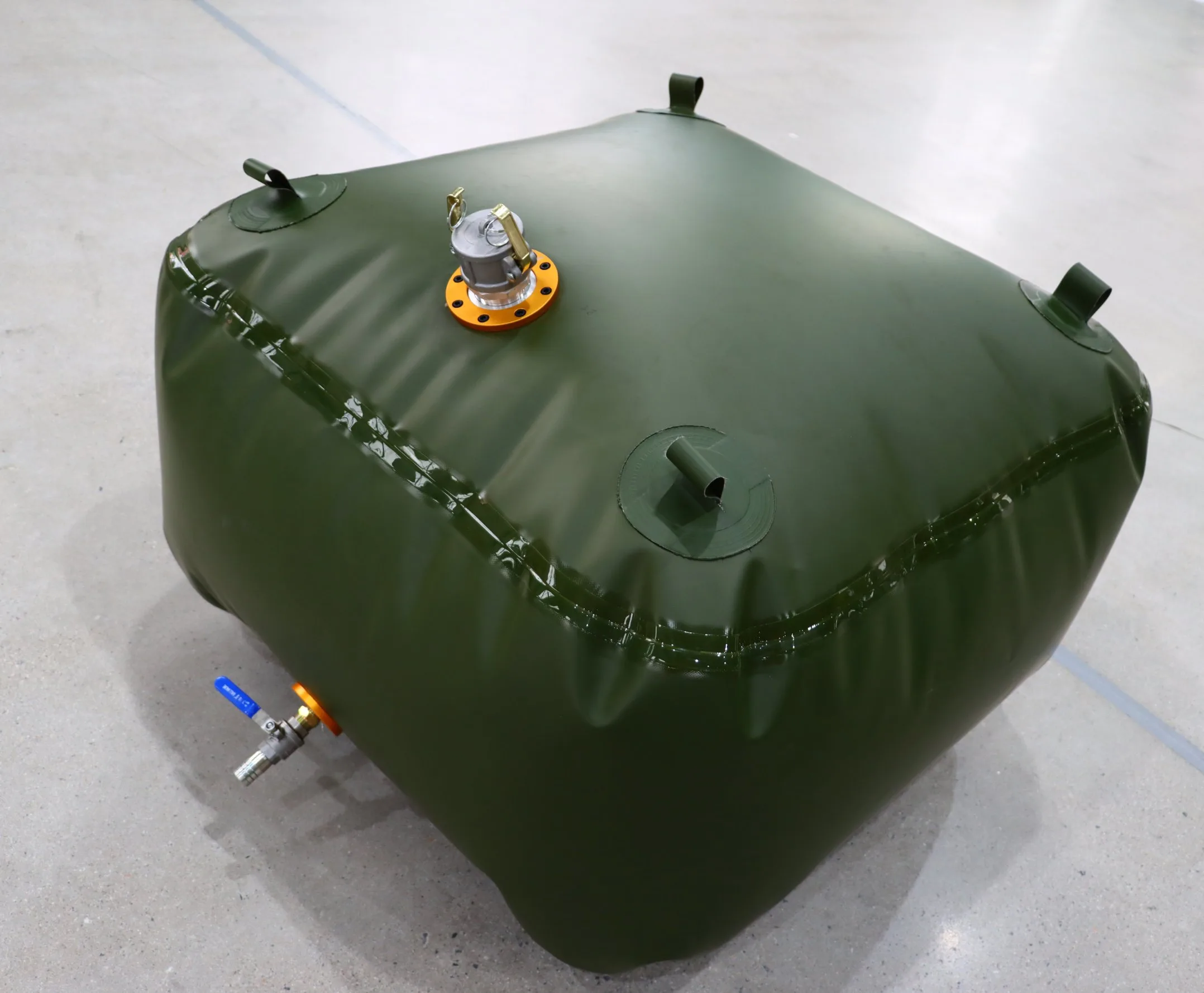
Start from fuel consumption and route plan
Before ordering a foldable fuel bladder, buyers should estimate how much extra fuel is actually needed. This depends on engine consumption, cruising speed, route distance, sea conditions, and whether the fuel bladder is for main range extension or emergency reserve.
A common mistake is choosing a bladder only by the largest possible capacity. In real marine use, a bigger bladder is not always better. A larger bladder takes more space, becomes heavier when filled, and may be more difficult to position, secure, drain, or fold. The better approach is to match capacity to the real trip.
Buyers can prepare these details before requesting a quotation:
| Detail to confirm | Why it matters |
|---|---|
| Fuel type | Diesel, gasoline, or other fuel affects material and safety discussion |
| Engine fuel consumption | Helps estimate required extra liters or gallons |
| Route distance | Determines range extension requirement |
| Reserve margin | Allows extra safety buffer |
| Available space | Limits practical bladder dimensions |
| Handling method | Affects size, weight, and folding expectations |
Balance range extension and onboard practicality
A foldable fuel bladder should support the voyage, not create a new onboard problem. If the boat has limited deck space, narrow cabin access, or no suitable flat area, the capacity may need to be adjusted. Buyers should also consider how the bladder will be filled, connected, drained, secured, and stored after use.
At Spacebladder, we often ask marine buyers to provide the available space dimensions instead of only saying the target capacity. For example, “500L diesel bladder for a boat” is useful, but “500L diesel bladder, available deck area 1800 x 900 mm, outlet connection required on one short side” is much more workable.
For buyers who are not sure about capacity, we suggest sending the boat use scenario and available space first. The final recommendation should consider both the fuel target and the real onboard layout.
Where can a foldable fuel bladder be placed on a boat safely?
A fuel bladder should not be placed randomly, especially on a moving boat with limited deck space.
A foldable fuel bladder should be placed on a stable, suitable surface where it can be secured, connected, monitored, and kept away from sharp edges, heat sources, and unnecessary movement.
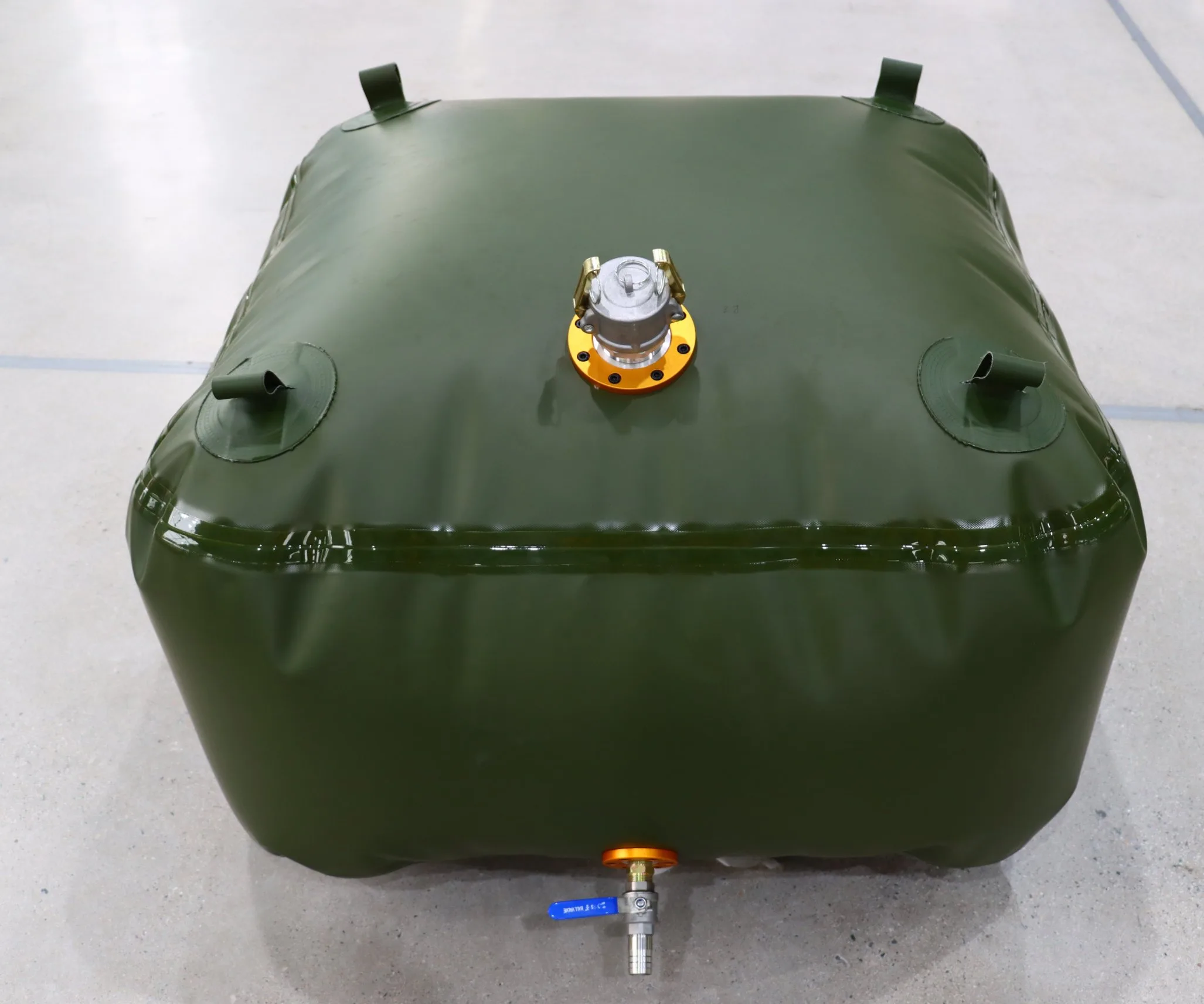
Placement affects performance and handling
For marine buyers, placement is one of the most important details. A flexible bladder changes shape as it fills and empties, so the available surface and surrounding environment matter. The buyer should avoid placing the bladder where it may rub against sharp hardware, slide during movement, block walking areas, or interfere with other equipment.
Possible locations may include a suitable deck area, cabin storage area, open work platform, or other stable onboard space. However, the final placement depends on the boat structure, fuel handling method, and local safety requirements. Buyers should follow applicable marine fuel handling rules and use professional judgment when planning auxiliary fuel systems.
The supplier can help customize dimensions and valve positions, but the buyer should confirm the real onboard environment. Photos, sketches, and available space measurements are very helpful.
What buyers should check before choosing placement
| Placement factor | Buyer self-check |
|---|---|
| Surface condition | Is the area flat, stable, and free from sharp edges? |
| Available dimensions | What length and width can the bladder occupy when filled? |
| Movement control | Can the bladder be secured during boat movement? |
| Valve access | Can the inlet and outlet be reached easily? |
| Heat and ignition risk | Is the bladder away from unsuitable heat sources? |
| After-use storage | Can the bladder be folded and stored after draining? |
A foldable bladder is not a rigid tank, so the filled shape may vary depending on fuel volume, surface, and positioning. This is why buyers should not only provide a target capacity. They should also provide the usable space, preferred valve side, and whether the bladder will be placed on deck, inside a compartment, or in another specific area.
If the buyer already has photos of the boat location, they can send them together with dimensions. This helps reduce misunderstanding before production and makes the custom design more practical.
What valve and hose connection details should be confirmed?
A fuel bladder can have good material and capacity, but the wrong connection may make it difficult to use.
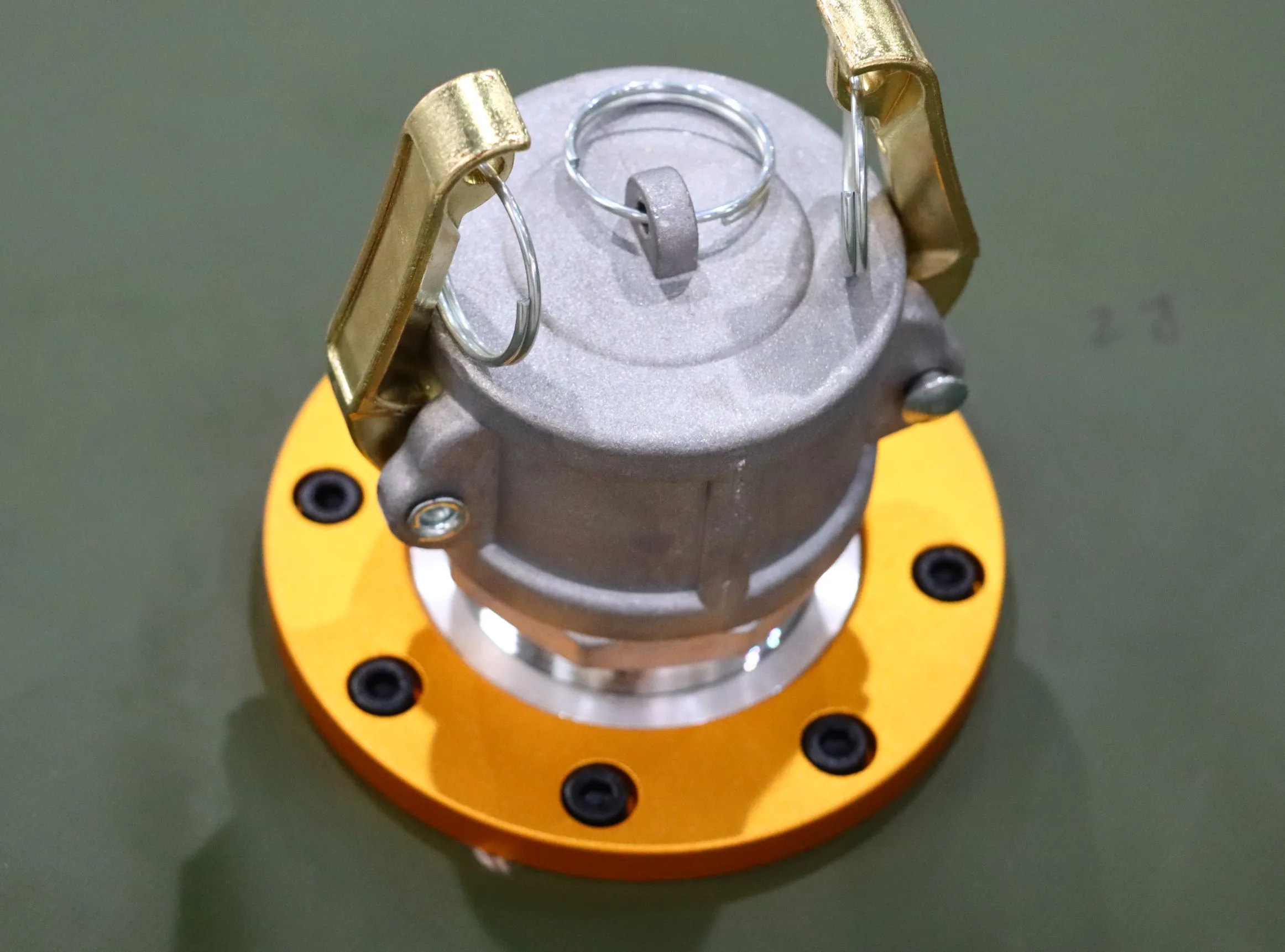
Buyers should confirm inlet size, outlet size, valve material, camlock or quick connector type, hose diameter, outlet position, and whether the connection must match an existing marine fuel system.
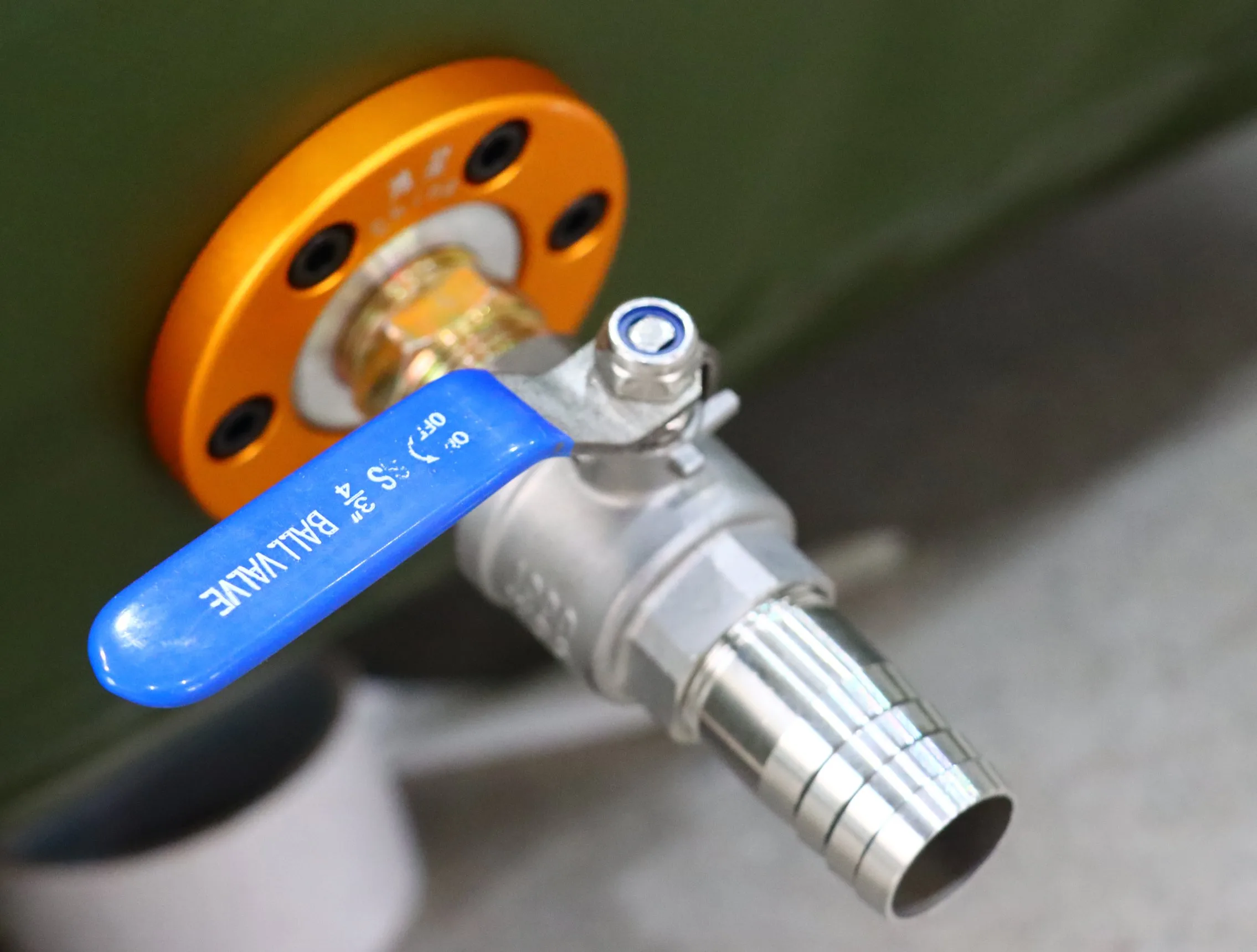
Connection details are not small details
For marine fuel bladder projects, valve and hose connection requirements should be discussed before production. Different buyers may need different inlet and outlet configurations. Some may want a large inlet with camlock for faster filling. Some may need a stainless outlet ball valve. Others may require a specific quick connector to match existing equipment.
A common problem is that buyers confirm capacity but forget connection details. After production, changing valve size or outlet position may be difficult or costly. For customized products, the connection design should be confirmed early.
Buyers should prepare the following information:
| Connection item | Details buyers should provide |
|---|---|
| Inlet size | Such as 2 inch camlock or other required size |
| Outlet size | Such as 1/2 inch, 3/4 inch, 1 inch, or customized |
| Valve material | Stainless steel, aluminum, or other requested material |
| Connector type | Camlock, quick connector, threaded connector, etc. |
| Hose diameter | Needed if connecting to an existing hose |
| Valve position | Top, side, end, or custom location |
| Fuel transfer method | Gravity, pump, manual transfer, or other method |
Matching the existing boat setup
Marine buyers often already have hoses, pumps, deck fittings, or fuel transfer equipment. In that case, the bladder must be designed around the existing system. If the hose is already fixed at a certain diameter, the outlet should match it. If the bladder will be connected in a narrow space, valve orientation and handle access should also be considered.
Spacebladder can support customized valve and connector options for many custom fuel bladder projects, but accurate information from the buyer is essential. A simple photo of the existing hose end or connector can prevent mistakes.
Buyers should also avoid assuming that every supplier uses the same valve standard. It is better to confirm size, thread, material, connector type, and position clearly before production. This is especially important for OEM buyers, distributors, and marine operators who need repeat orders with consistent specifications.
How can custom dimensions improve onboard space usage?
Boats rarely have unlimited free space, so standard tank dimensions may not fit the actual layout.
Custom dimensions help a foldable fuel bladder fit available deck or cabin space, improve connection access, support folding after use, and reduce wasted onboard storage area.
Capacity alone is not enough
A 500L bladder can be designed in different dimension combinations depending on the buyer’s available space and expected filled shape. For marine use, dimensions are often as important as capacity. A bladder that technically holds the right fuel volume may still be unsuitable if it blocks movement, cannot be secured, or places the valve in the wrong direction.
Custom dimensions are especially useful when the buyer has a narrow deck area, a defined storage compartment, or a preferred hose connection direction. Instead of forcing the boat to adapt to a standard product, the bladder can be designed to better match the boat’s usable space.
Buyers should provide:
| Custom detail | Why it helps |
|---|---|
| Available length and width | Helps design a suitable footprint |
| Height limitation | Important for cabin or covered areas |
| Preferred valve side | Improves hose routing |
| Folding requirement | Helps plan after-use storage |
| Quantity | Affects production planning and packing |
| Destination country | Helps estimate packing and shipping needs |
Better inquiry details lead to better quotation
A clear inquiry saves time for both buyer and supplier. Instead of asking only, “How much is a boat fuel bladder?” the buyer can provide a more complete request:
“We need a foldable diesel fuel bladder for a boat, around 800L, available deck area 2000 x 1000 mm. Required inlet: 2 inch camlock. Outlet: 1 inch stainless ball valve with quick connector. Quantity: 2 pcs. Destination: Australia. Application: auxiliary fuel for long-distance cruising.”
This kind of inquiry allows the supplier to evaluate capacity, material, valve configuration, approximate packing, and production feasibility more quickly.
For buyers who also need water storage or marine support products, related flexible storage options such as pillow bladder tanks may also be considered for non-fuel liquid storage applications. Fuel and water applications should be discussed separately because material and fittings may differ.
Conclusion
A suitable marine fuel bladder should match the route, fuel type, onboard space, valve connection, handling method, and real boat application.